Guides worth reading
Star atlas is a browser-ready fleet command economy built around ATLAS, POLIS, and Galia
Star atlas is a Solana-based space MMO where players manage ships, mine resources, craft supplies, trade assets, and prepare for larger fleet command inside the Galia galaxy. Its clearest live experience is not a finished blockbuster campaign; it is an economic and strategy layer where SAGE Labs, Holosim, the Galactic Marketplace, ATLAS, and POLIS connect fleet ownership with resource production.
The project blends two ambitions: a high-fidelity Unreal Engine space game and a browser-accessible blockchain economy. That split matters because different players enter through different doors. Some want ship interiors, arena combat, racing, and dogfights. Others focus on resource loops, crafting inputs, market pricing, and fleet management. The practical appeal of Star atlas comes from watching those layers converge into one shared world.
SAGE Labs turns the economy into the first real workbench
SAGE Labs is the most concrete way to understand the economic side. It runs in a browser and gives players a way to deploy fleets, mine resources, craft goods, and scan for SDUs. The design frames players as suppliers inside a galactic economy rather than simple treasure hunters. Ships become productive assets because they consume fuel, food, ammunition, and toolkits while performing tasks across sectors.
That loop gives Star atlas a structure closer to a logistics game than a simple token faucet. A player chooses ships, assigns them to missions, gathers materials, and uses crafted components to keep activity moving. Market demand then forms around the items needed by fleets. A small operator learns routes and costs; a larger guild coordinates multiple fleets, regions, and production chains.
ATLAS pays for activity while POLIS handles governance power
The economy uses two named tokens with different jobs. ATLAS serves as the main medium for in-game spending and rewards. It is the currency tied to operations, marketplace activity, and the daily economic life of the game. POLIS represents governance influence, giving holders a role in decisions around the broader ecosystem and political direction.
This two-token design creates a clear division between utility and control. ATLAS moves through the hands of active players as ships work, craft, consume, and trade. POLIS carries the governance narrative, including the idea that factions and organized groups help shape the future of Galia. The separation is important for anyone reading token data, because price movement in one asset does not explain the full game economy.
Fleet Command is the bridge between ships and strategy
Fleet Command is the promised strategic layer where the space fantasy becomes easier to grasp. Instead of treating a ship as a single collectible, this mode emphasizes armadas, territories, resources, and faction-level competition. The official framing points to a top-down view that lets commanders mass-manage fleets and outmaneuver rival groups across Galia.
Holosim gives that idea a lighter entry point. It is presented as a free-to-play in-universe simulation that runs in the browser, works without high-end hardware, and removes the need for ships or a crypto wallet at the start. That matters for onboarding because a space MMO with NFT assets and token mechanics carries a heavy learning curve. A simulation layer lets new users test strategic play before committing to the deeper economy.

The Galactic Marketplace makes ships, parts, and production visible
The Galactic Marketplace is where the player-owned economy becomes legible. Ships, components, and other assets trade through market activity connected to the wider Solana ecosystem. The marketplace gives economic players a way to price fleets, inspect supply, and evaluate whether a ship fits a mission plan, a crafting strategy, or a guild role.
Star atlas also publishes economy-focused figures such as marketplace volume, annual GDP-style metrics, and average ATLAS earned across the system. Those numbers are useful because the project's promise depends on more than graphics. A functioning economy needs repeated transactions, resource sinks, production demand, and enough active participants to make decisions matter.
How a new pilot starts without buying a large fleet
A first session should begin with the lowest-friction products. Holosim is the natural starting point for strategic play because it removes the wallet and hardware hurdle. SAGE Labs is the better next step for users who want to understand how ships produce economic output. The richer Unreal Engine experience belongs later, once the player understands factions, ships, resources, and costs.
- Explore Holosim to learn the fleet command rhythm in a browser.
- Study SAGE Labs resource loops before buying specialized ships.
- Compare ATLAS costs against fuel, food, ammunition, and tool requirements.
- Use the Galactic Marketplace to understand ship roles and pricing.
- Join a faction or guild only after learning the production flow.
This path avoids the common mistake of treating Star atlas as only a collectible ship market. The game rewards understanding systems: what a fleet consumes, what it produces, where resources move, and how faction goals influence demand. A small fleet with a clear job beats a scattered collection with no operating plan.
Galia gives the game its faction conflict and exploration frame
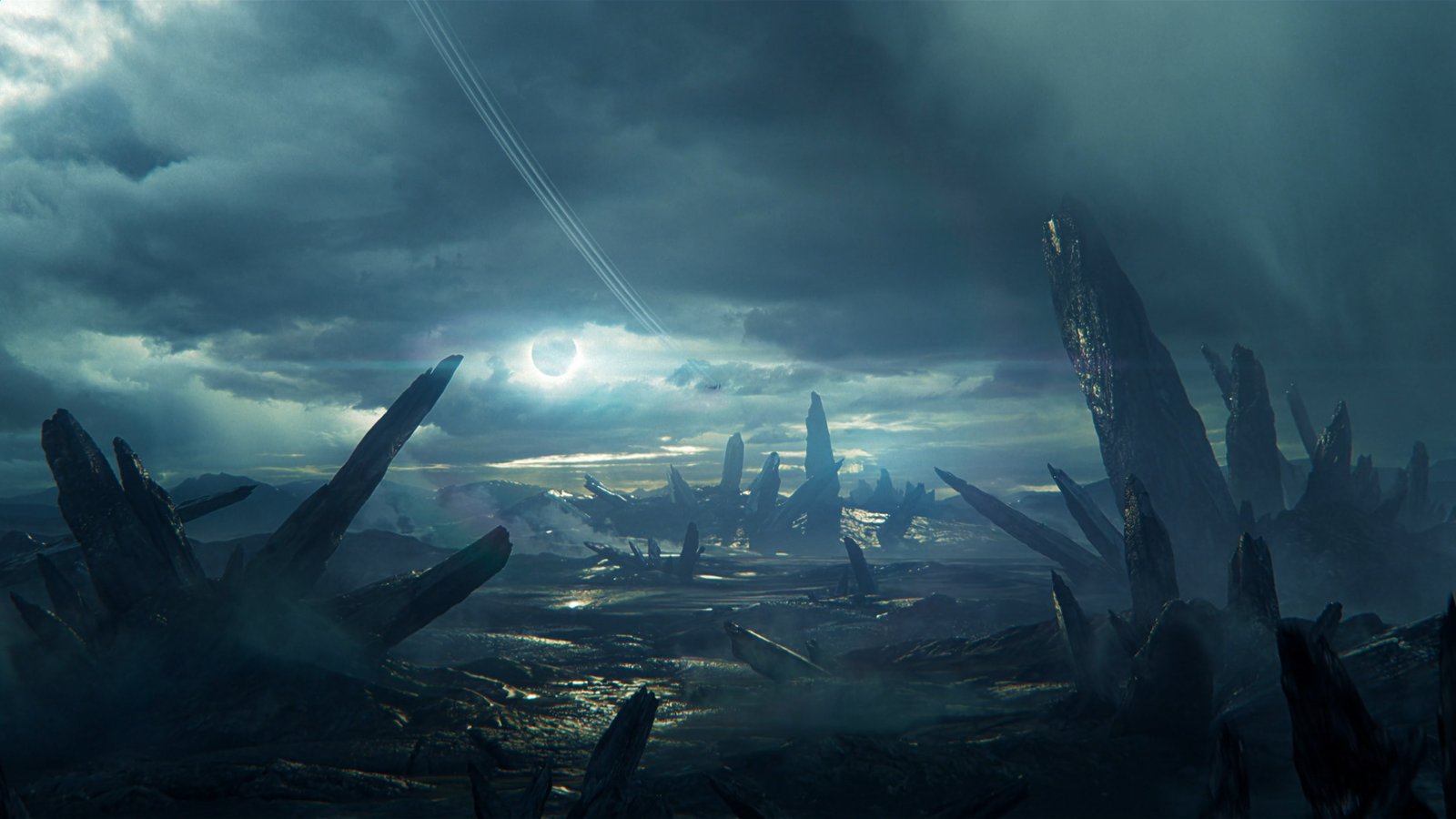
Galia is the named galaxy where the fiction, economy, and competition meet. It contains the exploration premise, the territorial conflict, and the lifeforms that give the setting a recognizable identity. The game's public materials emphasize unknown dangers, empire building, ship-to-ship combat, FPS encounters, quests, crafting, and political control.
The setting matters because the economy needs reasons for players to keep moving. Resources have value when territory, combat readiness, crafting, and expansion all pull on supply. Factions create social pressure, and guilds turn individual production into coordinated strategy. That is where the MMO promise becomes distinct from a standalone space sim.
The strongest appeal is ownership tied to repeatable gameplay
Typically, Star atlas attracts players who want a space game where assets, trade, and production sit close to the core loop. The browser products give the project a working economic layer while the higher-fidelity client pushes toward cinematic combat and exploration. That combination gives it a wider range than a single-mode crypto game.
The strongest benefit is continuity. A ship is not only a visual item; it connects to fleet planning, resource consumption, mission selection, market decisions, and faction identity. The economy gives everyday actions measurable consequences, while the MMO structure gives those actions a larger reason to exist. When those pieces align, the game feels like a persistent logistics and command environment rather than a short session arcade title.

Execution risk is the issue serious players track most closely
The project's scope is large: browser strategy, token economics, marketplace infrastructure, Unreal Engine environments, combat modes, racing, quests, factions, and governance. That ambition gives Star atlas its upside, but it also creates the main risk. Players should separate what is already playable from what remains in development and make decisions around the current product, not only the long-term trailer vision.
Crypto game economies also need durable sinks. If rewards enter faster than useful spending opportunities, token pressure rises and gameplay starts to feel like speculation. SAGE Labs addresses that with consumables and production chains, but the long-term health of the economy depends on active demand, balanced crafting, and enough compelling gameplay outside the market itself.
Where it fits beside traditional space games and crypto worlds
Players who compare this project with EVE Online, Star Citizen, or metaverse-style blockchain games are usually judging three things: depth, delivery, and asset ownership. EVE Online has a long-running player economy and corporation warfare. Star Citizen is known for high visual ambition and a long development arc. Blockchain worlds put more emphasis on tradable assets and tokenized ownership.
In most cases, Star atlas sits between those categories by pursuing a space MMO with blockchain-native markets on Solana. Its best current fit is a player who enjoys strategy systems, fleet logistics, and economic experimentation, then wants the cinematic space layer as it matures. Someone seeking a complete traditional MMO campaign on day one will judge it differently from someone studying a live on-chain economy.
Common questions about Star atlas
- What are SDUs in SAGE Labs used for?
- SDUs are scan-related items in the SAGE Labs economy, tied to fleet activity and resource discovery rather than arcade combat. They matter because scanning is part of the production loop that feeds the broader economy. A player focused on logistics watches SDU activity alongside mining, crafting, and consumable costs to understand whether a route or fleet assignment is productive.
- Can someone play without owning an expensive ship?
- Yes. The browser products create entry points before a user buys a large fleet. Holosim is positioned for immediate strategic play without ships, high-end hardware, or a wallet. A player who moves into SAGE Labs still needs to understand ship roles and operating costs, but the learning path does not have to begin with a major marketplace purchase.
- Which token is spent more inside the game economy, ATLAS or POLIS?
- ATLAS is the main utility token associated with activity, spending, and economic movement inside the game. POLIS is tied to governance and influence over the ecosystem's direction. That distinction is important because a player tracking missions, marketplace activity, and production costs is watching a different token function than someone studying governance power.
- Is the Unreal Engine game the same thing as SAGE Labs?
- No. They are connected parts of the same broader universe, but they serve different experiences. SAGE Labs is a browser-based economic and strategy product focused on fleets, resources, crafting, and scanning. The Unreal Engine side targets a more immersive third-person and combat experience with ship interiors, arena modes, dogfights, racing, and exploration.
- Why do guilds matter in the Galia economy?
- Guilds matter because the game's economy and faction conflict reward coordination. A single player manages ships and production choices, while a guild coordinates fleets, territories, crafting needs, and market strategy at a larger scale. In a game built around resources and political control, organized groups shape demand and create objectives beyond individual missions.